
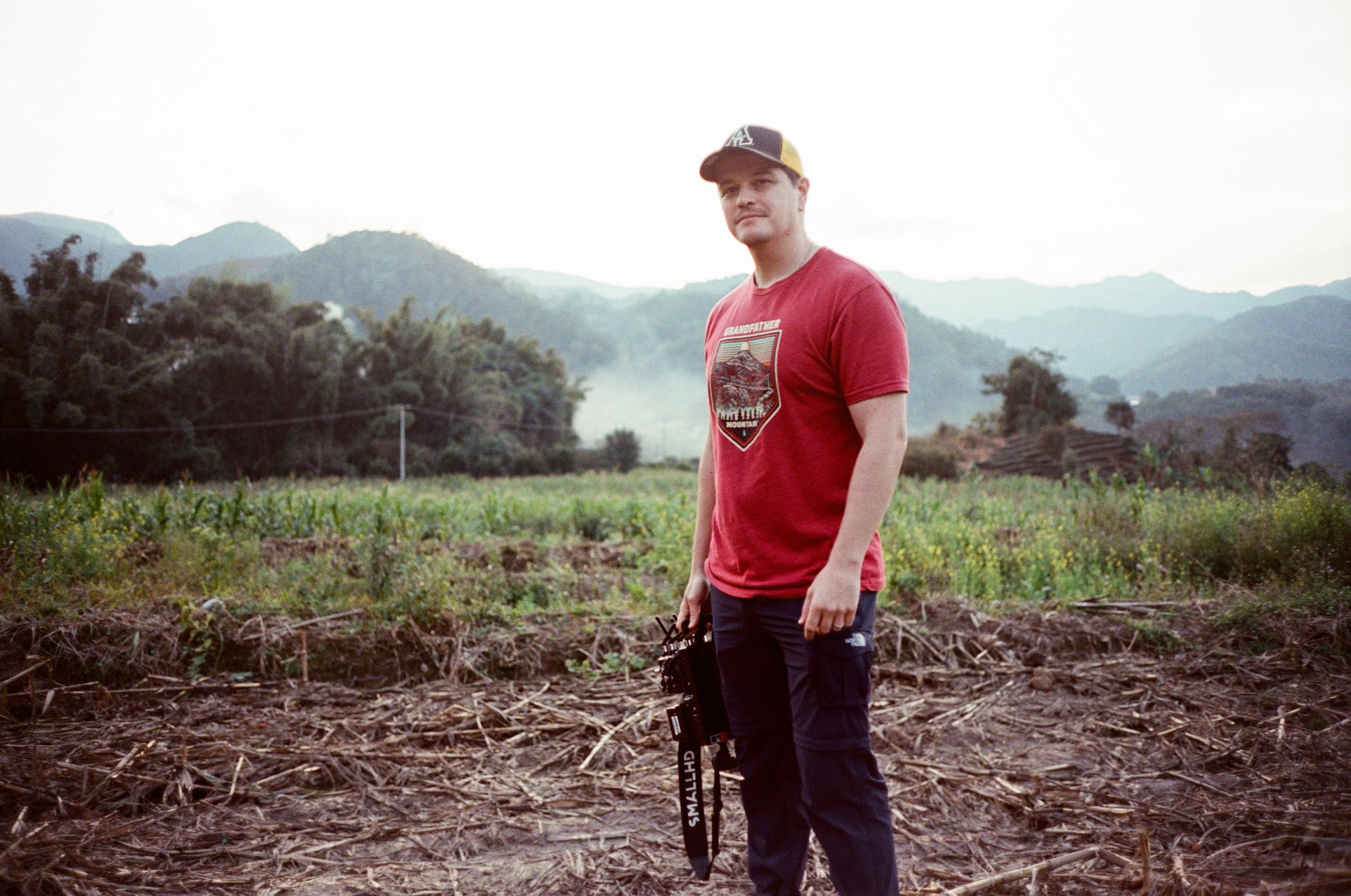
Joe Ashcroft is a film producer. As someone who has started his professional career as a photographer, videographer, and broadcast technician, he is incredibly skilled at capturing special moments on screen, and has worked on several critically acclaimed shows that have received international recognition. However, the magic in the art of what he does lies not in what comes through his camera lens, but how he ascribes meaning and narrative to the things that his camera sees. More than a film producer, Joe Ashcroft is a storyteller.
Truly anything and anyone can be the subject of a compelling story, he explains, saying that the key to any great narrative is to get to the core of what drives the person in question. In 2023, Joe worked as a story producer on Season 4 of MasterChef Singapore, which involved the gripping sub-narrative of Inderpal Singh, a Singaporean Sikh who broke down barriers of generational and familial pressure to join the show and fulfill his dream of becoming a professional chef by ultimately winning the competition.
Working closely with Inderpal throughout the competition so that the weight of his story would truly shine through, Joe was able to highlight the richness of his background and motivation in a manner to make him one of the most beloved contestants on the show.
“If you can get to the core of what makes that person or what makes that story,” Joe said in an interview with CHO LAW LLC, “I think that’s kind of what people react to or resonates with people the most. I think it’s the most raw; I think it’s the most authentic.”
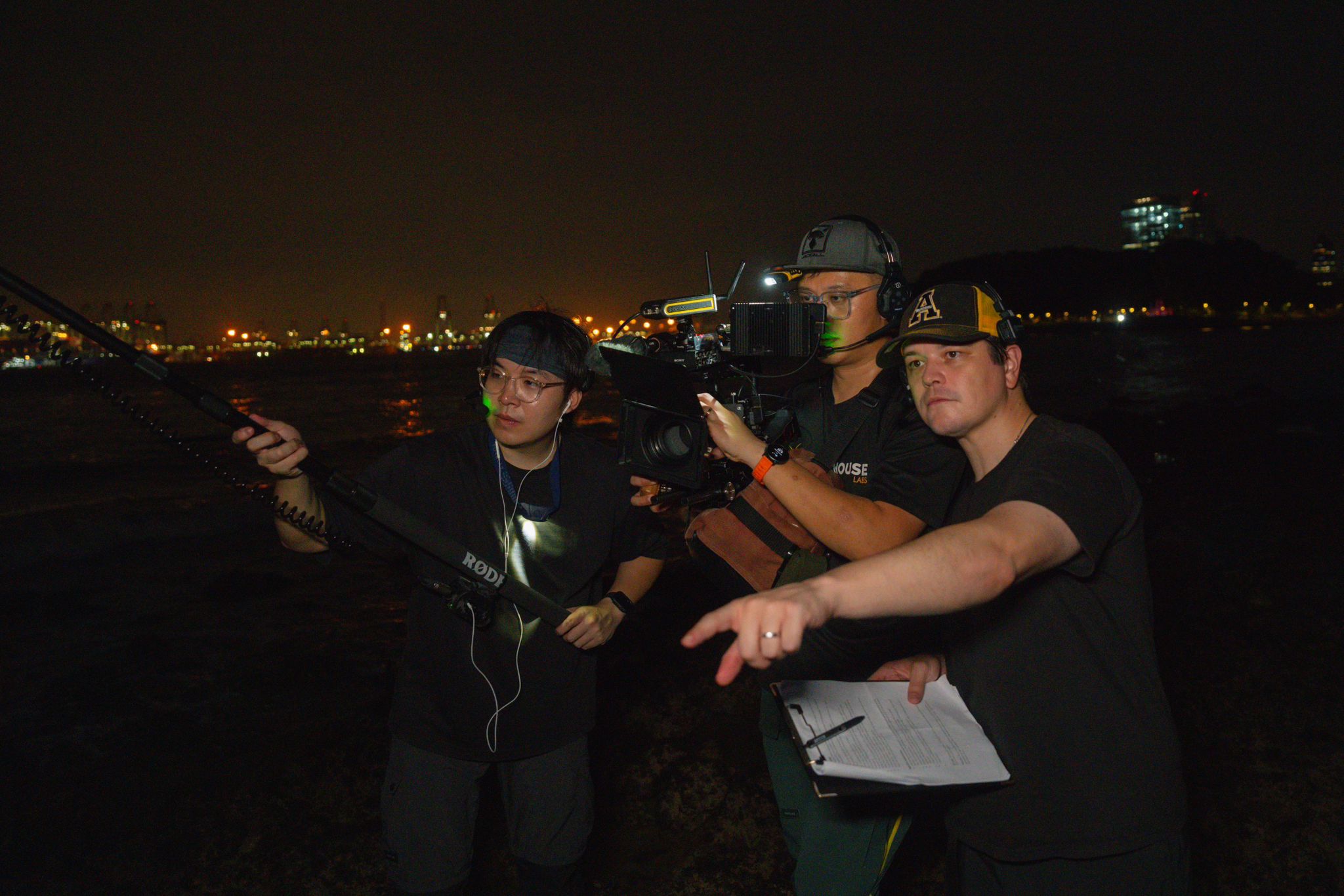
Having worked on a number of other shows, Joe notes that a compelling plotline isn’t always necessarily apparent, at which point it is up to the story producer to develop a narrative that can accurately capture the significance and complexity of the issue at hand. Even for documentaries involving animals—in which case asking direct questions through an interview would be out of the question —Joe explains that the right shot capturing a poignant moment in the appropriate sequence of cuts overlaid with the right sound can guide the audience through a meaningful narrative that’s worth tuning in for. If done correctly, a well-produced documentary could elicit a reaction unmatched by any featured film, according to Joe.
“I don’t think that I could ever cry watching a feature film, but I could cry watching a documentary,” Joe said. “There’s so much more emotion in a documentary than a feature film.”
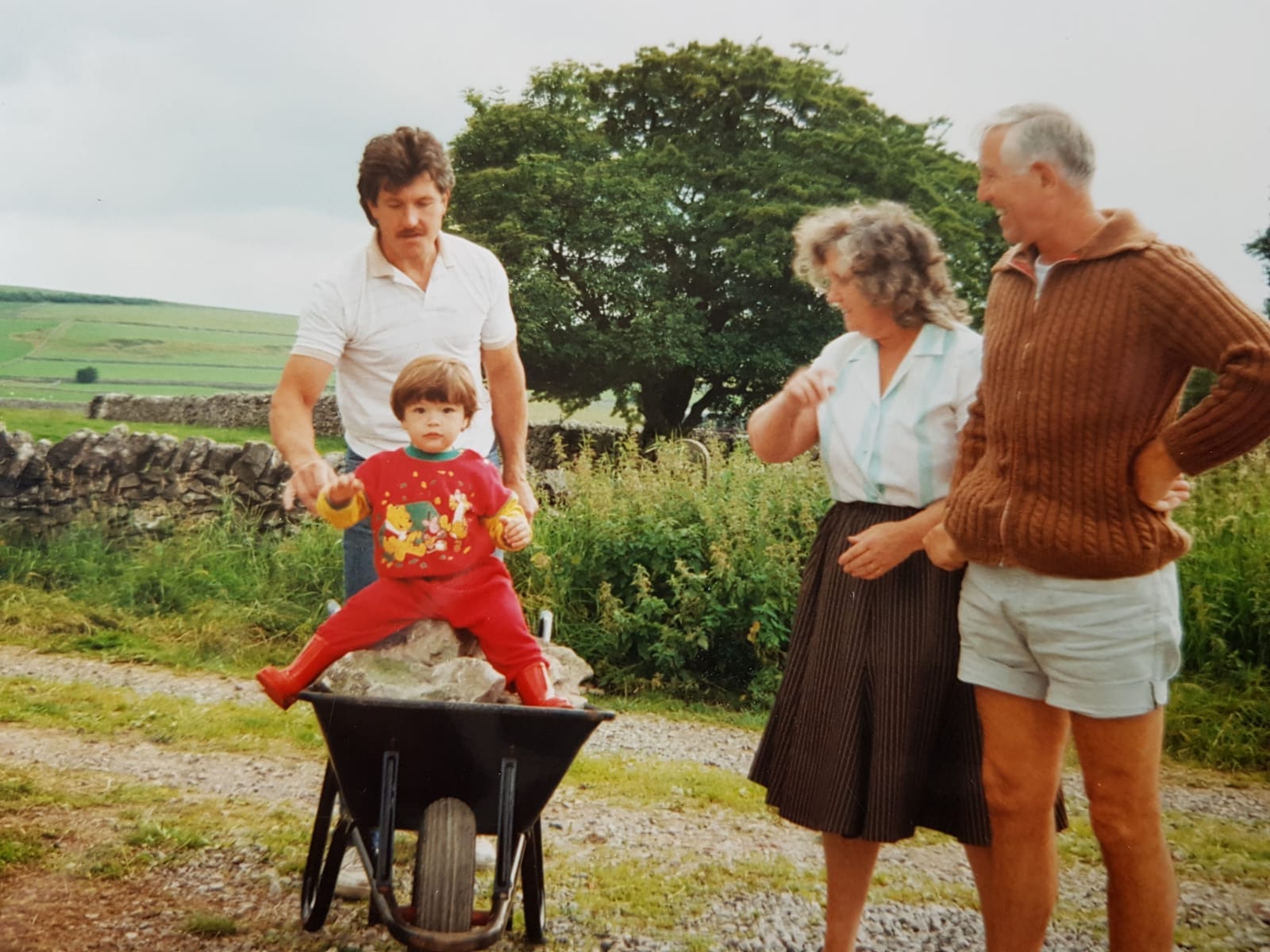
Born in the small town just outside Manchester in industrial northern England, Joe had grown up in a setting that seemed to write his future for him: nearly everyone he knew hadn’t moved far from home and would often go on to join the military or work in call centers.
“People say, ‘I want to be a film director’ or ‘I want to be an astronaut,'” he says. “My ambition was just to get the hell out of England.”
However, despite excelling in college in studying film and attending University for the Creative Arts, one of the best film schools in England, Joe had found himself back in his rural hometown. Far removed from the hubs of media and television production often found in large cities, it was difficult to find a job in the film industry.
Before graduating, Joe had consistently held jobs in retail and restaurants, and had delivered newspapers at 13. But after returning home, he was determined to make something of a career in film. Every day for the several months since returning home, Joe applied to every job he could find online, trying to get his foot into the door of the industry.
“I must have sent hundreds of applications over the course of like, three or four months,” he recalled. “And you’re not even getting rejected, you’re getting ignored.”
One day, Joe decided to apply for a position as a cruise line photographer—which he admits was still a step down from what he really wanted to do for work. The following day, all four cruise liners that he had applied to reached out with offers, one of which was not as a photographer, but as a broadcast technician onboard the ship.
“I was finally doing what I told myself I was going to do,” Joe said. “I was going to be making a living from this.”

For over a year, Joe sailed and worked in the Caribbean and Asia, traveling between Miami and the Bahamas and later from northern China to New Zealand’s Southern Island. On one particular voyage that took him to southeast Asia, he found himself staying in Singapore as he waited for the ship to be repaired. Immediately falling in love with the country, he applied to a number of positions in Singapore’s film industry and soon received an offer from the production company Beach House Pictures, where he still works today.
“I took the first job they gave me, which was Assistant Editor,” Joe said. Since then, he continued to work up the company, transferring over to become Assistant Producer and finally Producer, though he notes that he does much more than just produce.
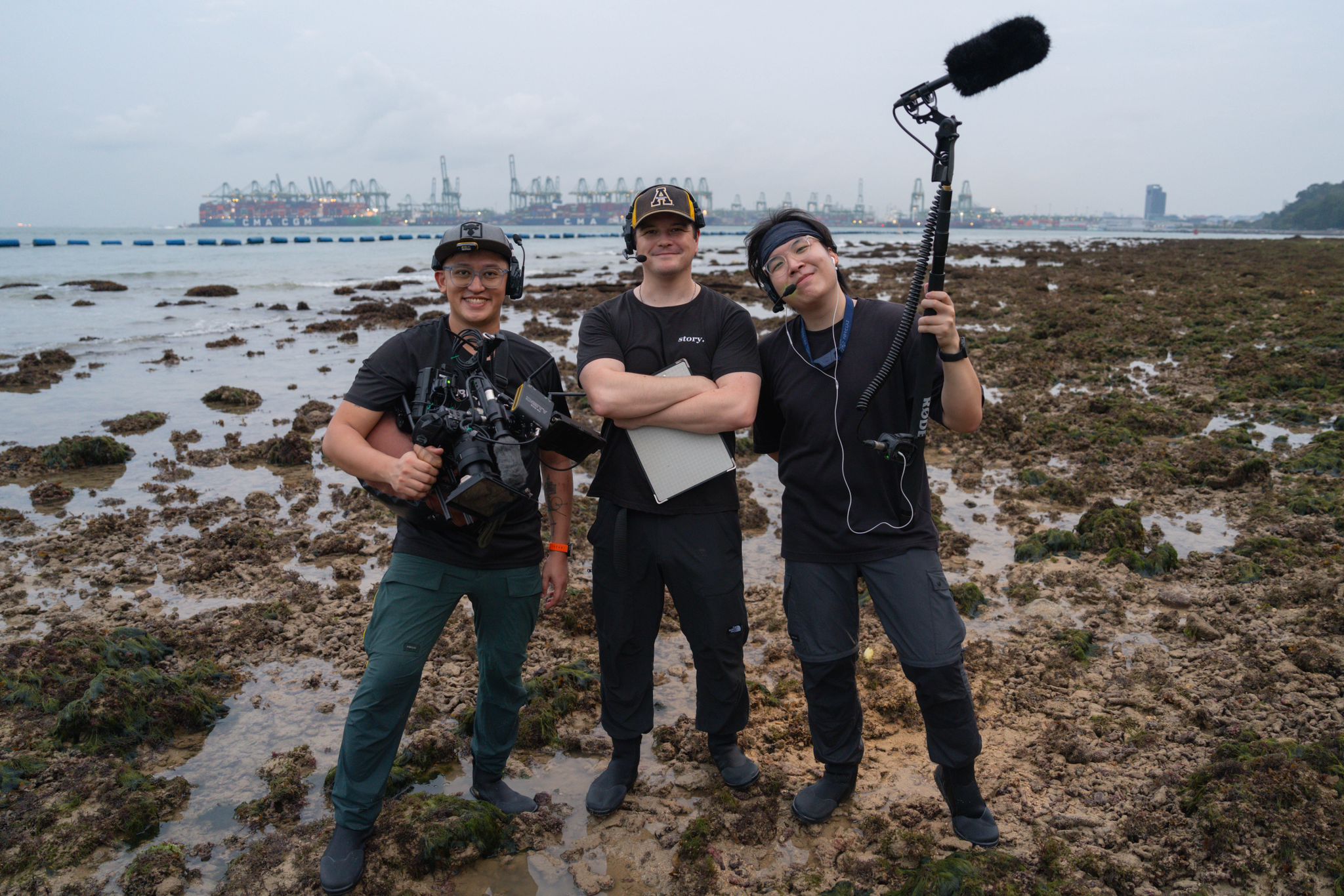
Since joining Beach House Pictures, Joe has worked as a producer for Evolve, Ed Stafford: Man Woman Child Wild, Ed Stafford: First Man Out, and Mind Your Manners. Mind Your Manners was nominated for “Outstanding Lifestyle Program” at the 50th Daytime Emmy Awards in 2023. His shows have won various awards at World Media Festivals, ContentAsia Awards, and Singapore Media Festival, and have been distributed by Netflix, History Channel, Discovery Channel, and Curiosity Stream.
“There’s no such thing as a sh*t story,” Joe likes to say. “Only a sh*t storyteller.”
This quote is compelling in and of itself—in that it bestows an innate sense of meaning and importance to everyone, no matter what their circumstances may be. Joe hopes to continue telling stories, wherever it may be next.
Image Captions (in order):
- Joe in Yunnan, China for the filming of “The Elephant Odyssey”
- Joe on the set for a film on endangered crabs in Singapore
- Joe with his father and grandparents
- Joe in Singapore waiting for the ship to be repaired
- Joe Ashcroft, storyteller